
About us
A company organised around the long life of software
Red Cover Luxury is an information technology company specialising in custom software development, cloud infrastructure, security engineering, product design, and data platforms.
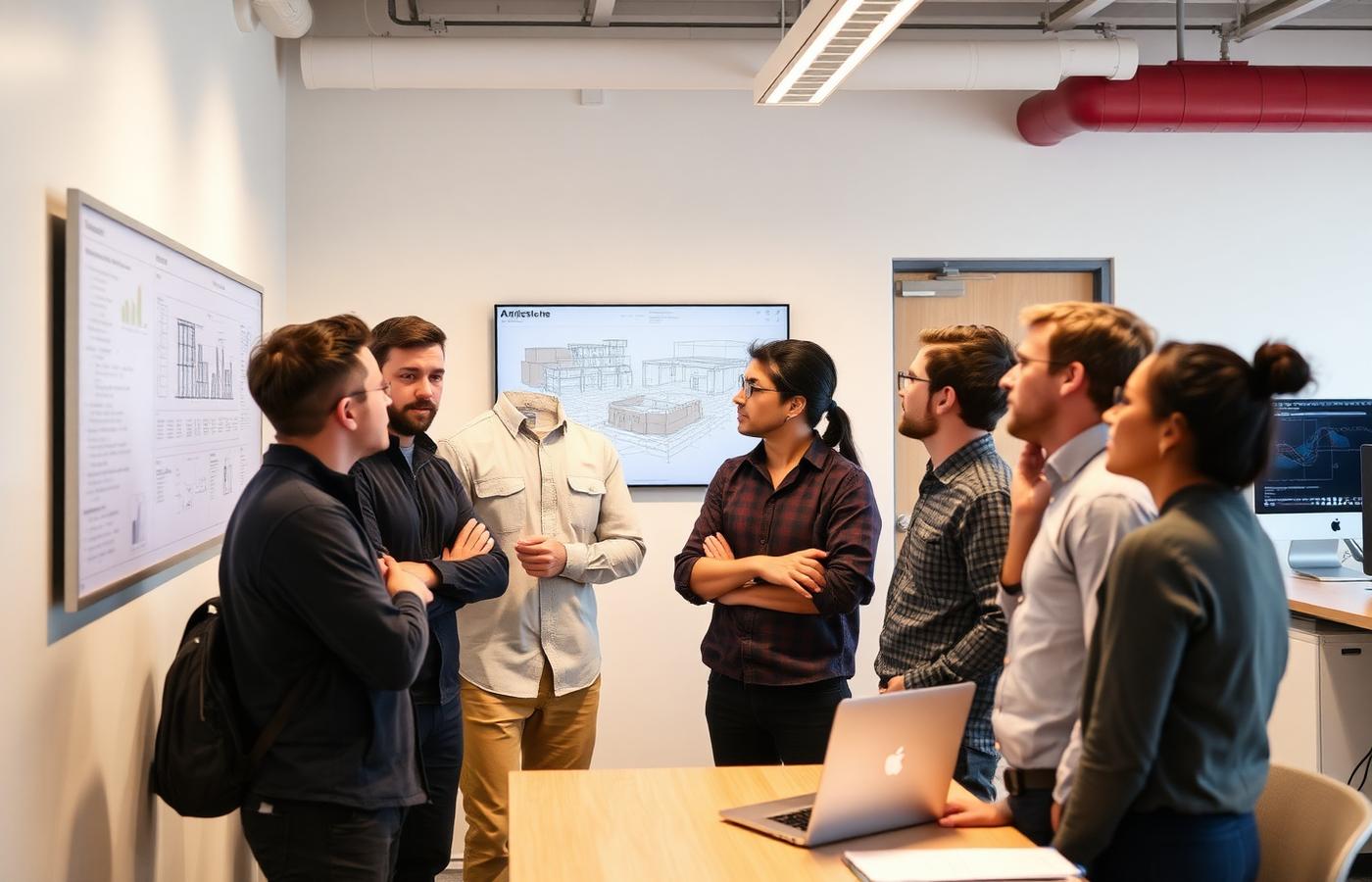
Company overview
We build and maintain software for organisations whose operations depend on it. The work spans the full lifecycle: understanding the domain, choosing an architecture, writing and reviewing the code, deploying it safely, and keeping it healthy afterwards.
Engagements are structured so that a small, senior group carries the context. We prefer continuity over rotation, because the cost of re-explaining a system is paid by the client every time it happens.
We do not present ourselves as a general-purpose vendor. When a request falls outside our competence, we say so — that answer is worth more than a plausible attempt.
Mission
To build software our clients can operate, extend, and rely on without us in the room.
Independence is the measure of a finished engagement. Documentation, tests, and comprehensible architecture are how we get there.
Vision
An engineering standard where reliability, security, and clarity are ordinary expectations.
We want the systems we leave behind to be unremarkable in the best sense: they work, they are understood, and they change without drama.

Company story
How the practice took shape
Red Cover Luxury grew out of repeated experience with the same failure pattern: software delivered quickly, celebrated briefly, and then slowly abandoned because nobody could safely change it.
We organised the company to avoid that outcome. Architecture decisions are written down with their trade-offs. Tests exist because they let us move faster later. Reviews are mandatory. Handover is planned from the first week rather than improvised at the end.
The name reflects the standard we hold ourselves to rather than any association with physical goods: careful work, finished properly.
Operating principles
- 01
Written decisions
Anything that would be expensive to reverse is recorded: the option chosen, the alternatives, and the reasoning.
- 02
Small, reviewed changes
Work arrives in increments a reviewer can genuinely read. Large, unreviewable changes are a defect in process.
- 03
Production is the reference
A feature is judged by how it behaves under real data, real latency, and real permissions.
- 04
No hidden progress
Status is visible in the repository and the demo environment, not only in a report.
- 05
Bounded scope
We would rather decline work than staff it with people learning the discipline at a client's expense.
Approach to collaboration
We work as one team with the client, in the client's time zone where practical. Decisions are made in shared channels, and the reasoning is recorded so people who were not present can follow it.
Each engagement has a named engineering lead who is accountable for technical direction, and a delivery rhythm agreed in advance: planning, demo, and retrospective at fixed intervals.
We expect clients to have opinions and to change them. Our job is to make the cost of each change explicit before it is committed to.
Engineering culture
Engineers here read more code than they write. Reviews are treated as teaching, not gatekeeping, and standards are documented so they do not depend on who happens to be reviewing.
We keep tooling boring and dependable: reproducible environments, fast test suites, and pipelines that fail loudly. Time saved on friction goes into the parts of the problem that are genuinely hard.
Post-incident reviews focus on the system rather than the individual. The output is a change to code, monitoring, or process.
Quality and security philosophy
Correctness first
Behaviour is specified before it is implemented, and verified by tests that would fail if the specification were violated.
Least privilege by default
Every service, job, and person receives the narrowest access that allows the work, and access is reviewed as the system changes.
Evidence over assurance
We prefer a rehearsed rollback, a load test result, or a restored backup to a statement that something should work.
Team expertise
Backend engineering
Domain modelling, API design, distributed services, and performance work on systems with real load.
Frontend engineering
Component architecture, state management, rendering performance, and accessible interface implementation.
Mobile engineering
Native and cross-platform delivery, offline behaviour, release management, and store compliance.
Platform engineering
Infrastructure as code, container orchestration, delivery pipelines, and production observability.
Security engineering
Threat modelling, identity and access design, cryptographic handling, and dependency governance.
Data engineering
Ingestion, transformation, warehouse modelling, and analytical interfaces with tested definitions.